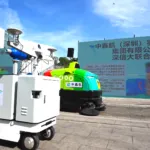

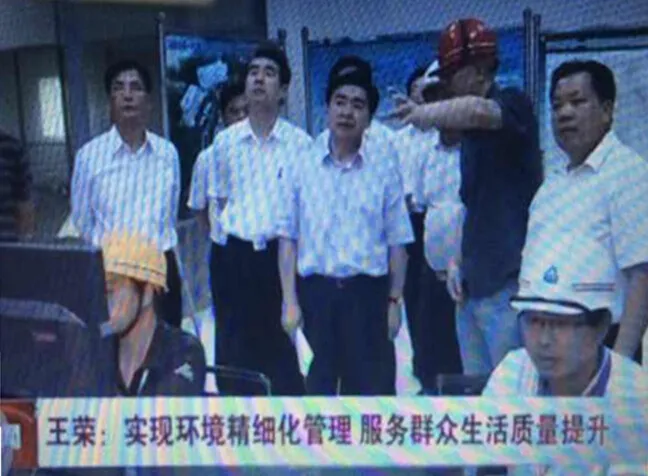
Yesterday afternoon, Wang Rong, Secretary of the Municipal Party Committee, conducted a research visit to assess the construction and operation of urban household waste treatment facilities. He inspected the Honghualing District Landfill in Longgang, which is managed by our company, focusing on the environmental remediation efforts in the area, and toured the pilot project for mechanized end-of-line sorting of household waste in that district.
In accordance with our city’s waste treatment facility plan, waste treatment has shifted from the previous “landfill-centered” approach to one “centered on incineration and comprehensive utilization.”
The city has established four environmental parks—Laohukeng, Qingshuihe, Pingshan, and Baige Lake—located in the western, central, eastern, and northern regions, respectively. The requirements stipulate that off-site sanitation facilities must be shut down upon the expiration of their design and operational periods. Currently, due to factors such as the low construction standards of existing facilities and the lack of waste sorting, no substantial progress has been made at the three environmental parks other than Laohukeng. Of the three newly planned or expanded waste-to-energy plants, only Phase II of Laohukeng has been completed.
Prioritize planning and environmental protection, and accelerate the construction of modern waste treatment facilities.
“In this new era, people have increasingly high expectations for environmental quality and quality of life.” Wang Rong commended the level of marketization in our city’s waste management sector and the achievements made, and set forth clear requirements for improving the planning, construction, and management of waste treatment facilities.
First, we must emphasize planning as the top priority and give priority to environmental protection. We must engage in proactive, scientific, and high-quality planning. Through a new round of planning and layout, we must strike a balance between production and daily life, ensuring that waste treatment facilities not only serve urban development but also meet the needs of citizens.
Second, we must make full use of scientific and technological advances to accelerate the construction of modern waste treatment facilities, actively draw on the waste management experience of developed countries and regions, and reduce secondary environmental pollution caused by waste treatment through effective methods such as incineration. We must vigorously advance the construction of waste treatment facilities in accordance with the timeline to ensure that projects are completed on schedule, put into operation as soon as possible, and yield results at the earliest opportunity.
Third, we will redouble our efforts in management, minimize the size of landfill areas as much as possible, strengthen basic waste recycling and reuse, reduce the volume of waste processed, and prioritize the principles of waste reduction, resource recovery, and harmless disposal in our management practices to improve treatment outcomes and promote a circular economy.
Fourth, we will step up public awareness efforts to foster greater public understanding and support, effectively address challenges such as the difficulty in selecting sites and constructing waste treatment facilities, and, through public participation, contribute to waste reduction and resource recovery.