


To thoroughly study and implement Xi Jinping’s Thought on Ecological Civilization and carry out the decisions and arrangements of the Party Central Committee and the State Council, the Ministry of Ecology and Environment has guided local authorities in thoroughly implementing major national strategies, formulating and implementing key ecological and environmental plans, advancing major reforms, key projects, and important policies in the field of ecology and the environment, and carrying out relevant major special initiatives. This has resulted in a number of institutional and practical innovations that are replicable and scalable, as well as a number of exemplary cases, which have now been compiled for reference by relevant departments and local authorities in their work.
The Zhoushan Area of the China (Zhejiang) Pilot Free Trade Zone is rich in marine resources, with numerous islands and reefs and vast maritime waters. It comprises a total of 1,390 islands of various sizes, covers a maritime area of 22,000 square kilometers, and has a total coastline length of approximately 2,444 kilometers. With its numerous coastal beaches and ports, it serves as a vital hub for residents“ daily lives and economic activities. With socio-economic development, significant progress has been made in land-based environmental sanitation efforts; however, the pressure to address marine pollution in nearshore waters remains substantial. Various pollutants—including marine debris, coastal household waste, and pollutants from aquaculture and fisheries—contaminate the marine ecosystem to varying degrees. To address this, Zhoushan City has been actively exploring and implementing a comprehensive ”marine sanitation” mechanism to effectively manage beach and nearshore marine debris, thereby providing a solid institutional foundation for building beautiful coastlines in a modern maritime city.
Establish a Mechanism for Ensuring Accountability
Local responsibilities for bay (beach) cleanup have been implemented. The city has designated 321 bays (beaches), covering a total shoreline length of 942 kilometers, and has assigned 409 bay (beach) management personnel at all levels, thereby establishing a four-tier bay (beach) management organizational system at the municipal, county (district), township, and village levels. Through efforts over the past few years, management responsibilities for bays and beaches have been largely enforced; a system for collecting beach litter at sea and onshore and disposing of it onshore has been largely established; and a long-term mechanism for beach litter management has been largely put in place.
Incorporate coastal litter management into the city’s refined management system. Adopt a model based on “local jurisdiction, sector-specific management, and the ”who uses, who manages’ principle,” clearly defining that each county, district, and administrative committee bears primary responsibility for managing litter on shorelines and in nearshore waters, while departments such as urban management, ecological environment, marine fisheries, ports and shipping, and maritime affairs assume their respective responsibilities. while waste management at ports, docks, hotels, factories, and other facilities is the responsibility of the respective industry regulatory bodies. This will establish a comprehensive framework for shoreline waste management that covers the entire chain—from source reduction and pollution control to cleanup and transportation.
Establish a four-tier supervision and evaluation mechanism. At the municipal, county (district), management committee, town (subdistrict), and village levels, implement a tiered system of designated responsibility zones to strengthen local management and establish long-term mechanisms and supervision and evaluation systems for the detection, cleanup, and collection of bay (beach) litter that are tailored to local conditions. At the same time, conduct unscheduled unannounced inspections, and once problems are identified, immediately urge corrective action.
Establishing Three Regular Teams“
Establish specialized marine sanitation teams. The governments and administrative committees of each county (district) shall effectively strengthen the development of marine sanitation teams and enhance their waste collection and disposal capabilities.
Establish a marine and coastal cleanup team. Publicly disclose information on the entities responsible for managing bays (beaches), port bays (beaches), fishing port bays (beaches), and scenic area bays (beaches), while clearly defining the cleanup responsibility system for these bays (beaches).
Actively cultivate a volunteer force for “Community Beaches.” Encourage volunteer groups to carry out beach cleanup campaigns, participate in marine sanitation efforts, and contribute to the “Beautiful Bay” initiative.
Improve the Mechanism for Managing Shore and Beach Patrols
Coordinate and oversee the management of shoreline and tidal flat patrols across the entire area. Bay (tidal flat) management organizations at all levels shall conduct regular patrols of their designated shoreline and tidal flat areas and submit reports on the performance of their duties.
Conduct regular beach cleanup efforts. In conjunction with the “Beautiful Villages” initiative and the comprehensive environmental improvement campaign for fishing villages and rural areas, carry out regular concentrated beach cleanups and special cleanup operations.
Organize and carry out law enforcement inspections of bays and beaches. Strengthen interdepartmental collaboration, maintain close coordination, and work together to advance efforts to supervise and inspect waste management in bays and on beaches, with the goal of jointly improving the environmental quality of these areas.
Innovative Methods for Technology Inspections
Utilize auxiliary technologies such as remote video surveillance and drone patrols to improve the efficiency of coastal cleanup and beach maintenance, and establish a closed-loop mechanism for detection, supervision, and feedback.
During the problem identification phase, a third-party contractor is commissioned to conduct point-by-point patrols and monitoring of the bay’s beaches and marine discharge outlets once every two weeks using drones. The contractor analyzes and assesses visual data of issues identified through aerial photography or on-site investigations, and issues patrol reports and lists of identified issues.
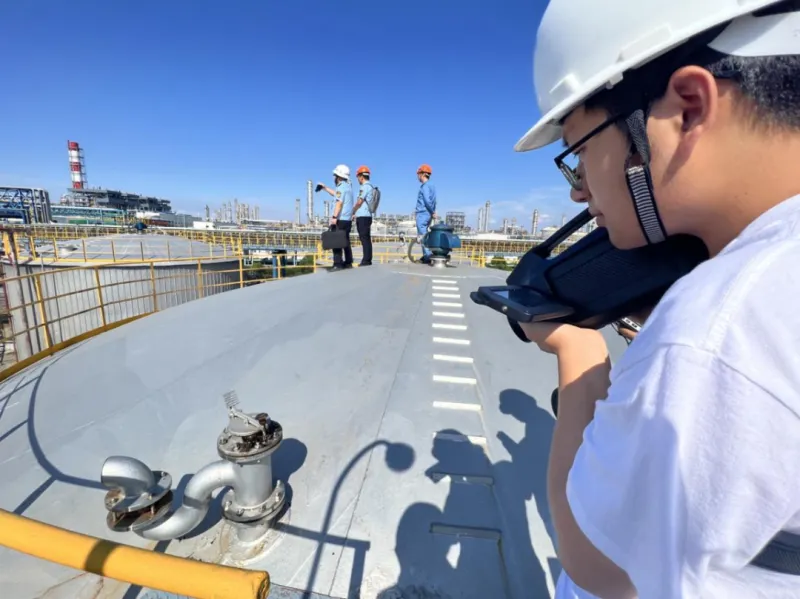
During the issue assignment phase, based on the results of dynamic inspections and the list of issues, responsible entities are identified according to the “Three Responsibilities at the Doorstep” principle; the issues are assigned to the responsible entities; corrective measures and recommendations are proposed; and periodic unannounced inspections are conducted.
During the rectification feedback phase, issues on the list must be fully rectified within one week of being assigned; for particularly difficult issues, the deadline may be extended by one week. Before-and-after photos documenting the rectification must be submitted to the Municipal Water Management Office by the specified deadlines.
Strengthening Support for Key Resources
Strengthen financial support. Actively seek support from relevant departments, such as the finance department, and raise special funds for marine sanitation—through the coordinated allocation of marine area usage fees or other fiscal measures—to cover the operational and maintenance costs of vessels and vehicles, as well as personnel expenses, thereby ensuring the effective operation of marine and beach cleanup, waste collection, and transportation.
Improve information-based prediction and forecasting. Utilize video image recognition and dynamic numerical simulation technologies to predict and forecast the drift trajectories of offshore debris, thereby supporting precise cleanup and maintenance efforts. Strengthen public awareness campaigns regarding beach debris management and encourage all sectors of society to participate in beach cleanup activities, fostering a positive public sentiment toward beach debris management.
Contributed by | General Affairs Department, Ministry of Ecology and Environment