Bulky waste is defined as waste items that are large in size, highly integral, or require disassembly for further processing and recycling. It includes three categories: discarded household appliances, discarded furniture, and other bulky waste. According to the definition in the *Technical Requirements for the Collection and Utilization of Bulky Waste*, waste items weighing more than 5 kg, with a volume exceeding 0.2 m³, or a length exceeding 1 m—and which are highly integral and require disassembly or crushing before reuse or disposal—are classified as bulky waste.
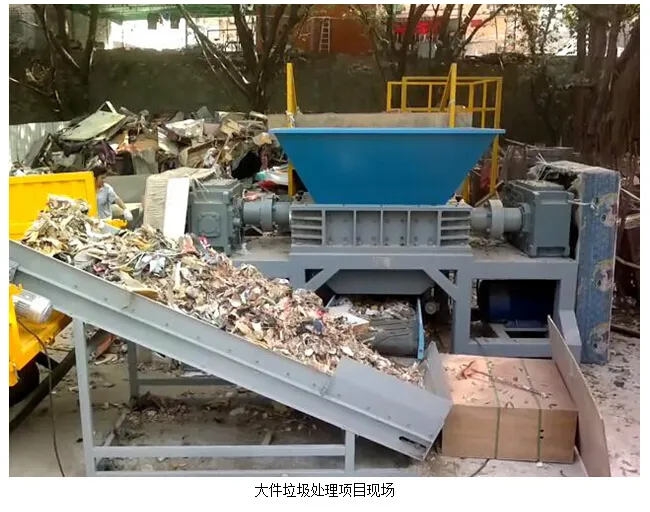
After bulky waste is shredded as a whole by a shredder, the material is conveyed via a belt conveyor and feeds directly into the bed of a transport truck at the end of the conveyor belt. It is then subjected to pyrolysis and carbonization, producing recyclable coke, tar, and combustible gas.