① Prevention and Control Characteristics and Risk Areas
Food waste treatment plants accept only household food waste, restaurant food waste, and other food waste; the acceptance of medical waste related to the pandemic and dead poultry and livestock is strictly prohibited. Food waste entering the facility poses a potential risk of viral transmission from sources such as masks used by individuals suspected of being infected or those in the incubation period, including close contacts. Additionally, the movement of people, dust, and aerosols during the collection and transportation of food waste, as well as aerosols generated during the treatment process, may also pose risks of viral spread, and the wastewater may contain pathogens.
② Prevention and Control Requirements
To prevent the spread of the virus through the collection, transportation, and processing of food waste; to prevent food waste collection, transportation, and processing personnel from becoming infected with the virus, from contracting the virus through cross-infection, or from being infected by individuals outside the facility; and to ensure the normal operation of food waste collection, transportation, and processing, it is essential to place a high priority on epidemic prevention and control measures for food waste collection, transportation, and processing.
II. Establishment of the Plant-Wide COVID-19 Prevention and Control and Workplace Safety Task Force
Each food waste treatment plant shall establish a Plant-Level Epidemic Prevention, Control, and Workplace Safety Working Group (hereinafter referred to as the “Prevention and Control Group”). The Prevention and Control Group shall consist of plant leadership, department heads, and collection and transportation managers, among others. Its primary responsibilities include: formulating plant-level epidemic prevention and workplace safety procedures; guiding, coordinating, organizing, and supervising epidemic prevention and control efforts on the plant premises; conducting public awareness campaigns on epidemic prevention and control; and ensuring proper disinfection of the plant premises; Establish a WeChat group for facility staff to report information such as employee health status daily, implementing a “daily reporting” system for workplace safety.
III. Protection and Management During Collection and Transportation Operations
① Waste collection and transportation staff must have their temperature checked once at the start of each shift and once at the end of each shift, and the results must be recorded. If waste collection and transportation staff exhibit symptoms such as a temperature exceeding 37.3 degrees Celsius, fever, headache, cough, or fatigue, they must promptly take measures such as self-isolation and seeking medical attention, and report the situation to the prevention and control team in a timely manner. They must not conceal such information or report to work while sick.
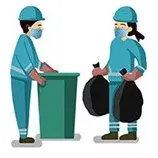
② Collection and transportation personnel must properly wear protective equipment such as masks, protective suits, goggles, and gloves. Masks, gloves, and protective suits must not be removed during work.
③ Collection and transport staff must use collection tools; they must not come into direct contact with food waste and are prohibited from picking it up with their bare hands. Staff should disinfect their collection tools before and after each day’s work.
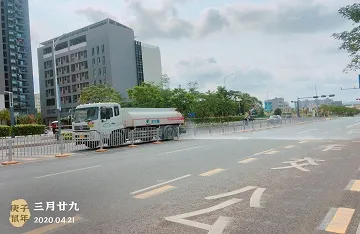
④ Food waste collection bins, collection points, and collection and transport vehicles must be cleaned and disinfected before and after each operation; when disinfecting, ensure that both the interior and exterior of the vehicles are effectively disinfected.
⑤ Food waste collection and transport vehicles must be equipped with disinfectant and must strictly follow their designated routes, avoiding areas with high incidence of the epidemic and quarantine zones.


IV. Management of Personnel and Vehicles Entering and Leaving the Plant
① Strictly manage the entry and exit of employees on the factory premises. In principle, all employees residing on the premises must not leave the factory; if it is truly necessary to go out, they must report to the Prevention and Control Team for review and may only leave after obtaining the team’s approval. Employees returning to the premises after leaving must report their whereabouts, have their temperature checked, and be subject to enhanced monitoring. Employees without on-site housing may enter and exit the premises only once each morning and evening for work; security personnel will check their temperature and record their details, and entry or exit will be permitted only if their temperature is normal.
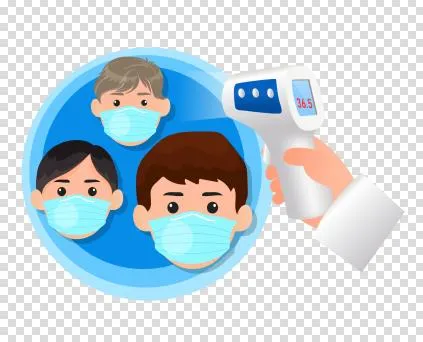
② Strictly enforce access controls for food waste collection and transport vehicles and material supply vehicles entering the facility. For drivers and accompanying personnel of food waste collection and transport vehicles and material supply vehicles, security guards must check and record their body temperatures and perform necessary disinfection; they may only enter the facility after their body temperature is normal and they are wearing a mask properly. If a body temperature is abnormal, they must not be allowed to enter the facility; they must be isolated and the situation promptly reported to the prevention and control team.
③ Strengthen access control for visitors and vehicles entering the plant. As a general rule, visitors and vehicles from outside the plant will not be permitted to enter; if entry is absolutely necessary, a record must be made and submitted to the plant’s epidemic prevention and control team for approval. Additionally, entry is permitted only after confirmation by the designated reception staff and upon wearing a mask properly. Anyone with an abnormal body temperature will not be permitted to enter the plant, and their information must be reported to the plant’s epidemic prevention and control team.
V. Protection and Management of Personnel on the Factory Premises
① Employees on the factory premises must have their temperature checked once in the morning and once in the evening each day, and these readings must be recorded. If an employee exhibits symptoms such as a temperature exceeding 37.3 degrees Celsius, fever, headache, cough, or fatigue, measures such as isolation and seeking medical attention must be taken immediately, and the Prevention and Control Team must be notified promptly. Employees must not conceal such symptoms or report to work while sick.
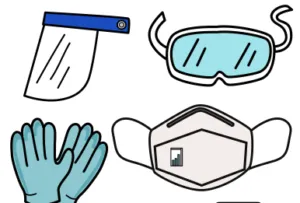
② Plant operators, disinfection personnel, and others must properly wear protective equipment—including medical protective masks, medical surgical masks, or N95 masks; protective suits; goggles; long rubber gloves; work uniforms; rubber rain boots; hard hats; and safety shoes—before starting work; Other office staff and visitors must wear masks in all public areas. Masks should be replaced and disposed of promptly.
③ Strengthen management of key protection areas such as the unloading area, pretreatment area, and wastewater collection pond. Strengthen occupational safety measures for personnel in these areas; all personnel entering the unloading area, pretreatment area, and wastewater collection tank must wear protective equipment such as hospital-grade masks, surgical masks, or N95 masks, as well as protective suits, goggles, gloves, rubber boots, and hard hats.
④ All personnel entering or exiting key protected areas must disinfect or properly dispose of their personal protective equipment. They must change into their work attire in the designated changing areas and wash their hands and faces before entering the production and office areas.
⑤ Footwear used in high-risk areas must be designated exclusively for that purpose and stored in a designated area; it is prohibited from being brought into production or office areas.
⑥ Reusable safety goggles, gloves, work uniforms, and other items should be soaked in a disinfectant with an effective chlorine concentration of 200 mg/L for 20 to 30 minutes, then rinsed with clean water and air-dried; Specialized footwear for high-risk protection areas must first be rinsed with a high-pressure water jet, then disinfected, washed, and air-dried according to the method described above.
⑦ Discarded face masks, hand wipes, and other items on the factory premises should be placed in designated containers, cleared out daily, and disinfected before cleanup.
⑧ Conduct hand hygiene training for employees on the factory premises; equip all areas with sink faucets, hand soap, and paper towels or hand wipes; and encourage employees to develop the habit of washing their hands frequently and properly.
⑨ Ensure proper ventilation and disinfection in dormitories, offices, cafeterias, and other facilities. Avoid group gatherings; implement measures to spread out mealtimes, such as staggered meal times, one person per table, and takeout meals. Encourage handwashing and hand sanitizing before meals, and refrain from talking while eating.
VI. Safety Measures and Management in the Factory Premises
① Maintain proper record-keeping for food waste entering the facility, including the source of the food waste (specified down to the street or residential community).
② Minimize contact between operators and production equipment as much as possible; before performing equipment maintenance or repairs, disinfect the equipment using a disinfectant solution with an effective chlorine concentration of 2,000 mg/L. Food waste reception equipment and pretreatment facilities should be disinfected once daily.
③ The deodorization system must operate continuously, and the unloading area and pretreatment workshop must maintain negative pressure 24 hours a day. Facilities with the necessary capabilities should adopt deodorization processes that effectively inactivate viruses.
④ Where wastewater from the plant is treated in conjunction with wastewater from other facilities, it must be disinfected prior to such combined treatment.
⑤ If a food waste treatment facility co-processes fecal matter, in principle, it shall only accept fecal matter generated from sources other than individuals under home quarantine, centralized quarantine observation sites, and designated medical institutions.
VII. Disinfection Requirements for the Plant Premises
① Disinfection of Production and Office Areas
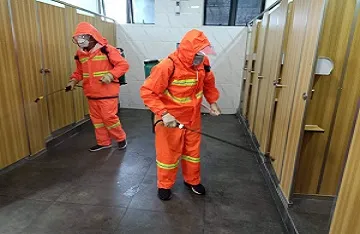
1. Frequency Requirements: Disinfection should be performed once in the morning and once in the evening each day, with each session consisting of two rounds of disinfection—first “from the inside out,” then “from the outside in.”
2. Operating Requirements: Key areas such as door handles, stair railings, elevator buttons, conference room tabletops, tables and chairs, air conditioner remote controls, projector remote controls, faucets, toilet seats, and office floors must be disinfected. Appropriate protective measures must be implemented for elevator use.
3. Operating Procedures: Prepare a disinfectant solution with an effective chlorine concentration of 500 mg/L for wiping.

② Disinfection of the cafeteria area
1. Frequency Guidelines: Wipe down the area once each morning, at noon, and in the evening, or schedule the number of wipe-downs appropriately based on meal times.
2. Operational Requirements: Tables, chairs, floors, and other surfaces must be disinfected. Factory cafeterias that have the necessary facilities should install ultraviolet disinfection lamps or UV tubes to perform ultraviolet air disinfection in the enclosed cafeteria space for at least 60 minutes after meals have ended.
3. Operating Procedures: Prepare a disinfectant solution with an effective chlorine concentration of 500 mg/L for wiping.
③ Disinfection of Food Waste Collection Vehicles
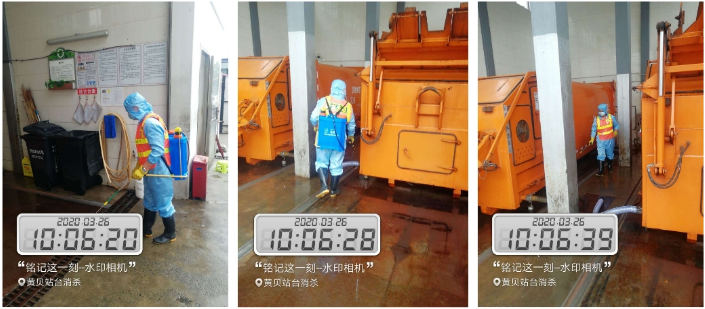
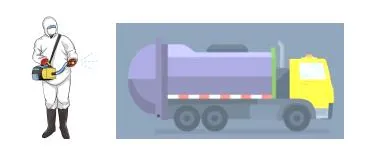
1. Frequency Requirements: Vehicles must undergo disinfection once upon entering and once upon leaving the facility.
2. Operational Requirements: Disinfection must be performed on all sides of the vehicle and at the loading opening of the container.
3. Operating Procedures: Prepare a disinfectant solution with an effective chlorine concentration of 2,000 mg/L for disinfection. Focus on disinfecting vehicle tires and container loading ports. Disinfect until the treated areas are slightly damp, using a spray rate of 200–300 mL/m².
④ Disinfection of Food Waste Unloading and Transportation Areas
1. Frequency Requirements: During unloading, disinfection should be performed once every 2 hours.
2. Operational Requirements: Disinfection procedures must be performed on the ground, unloading doors, and surrounding walls in areas ranging from the access road used to transport food waste into the facility to the unloading platform.
3. Operating Procedures: Prepare a disinfectant solution with an effective chlorine concentration of 2,000 mg/L for disinfection. Focus on disinfecting the floor, the unloading door, and the surrounding walls. Disinfect until the treated areas are slightly damp, using a spray rate of 200–300 mL/m².
VIII. Requirements for the Management of Protective Supplies and Disinfection on the Factory Premises
① Protective supplies (including masks, gloves, rubber rain boots, protective suits, goggles, hard hats, hand sanitizer, disinfectants, thermometers, etc.) should be managed by designated personnel; sufficient supplies of commonly used medications, first-aid kits, and equipment should be provided; and emergency vehicles should be arranged.
② Requests for protective supplies must be submitted to the Prevention and Control Team; supplies may only be collected after the request has been approved. No individual or department may take protective supplies from the factory premises without authorization.
③ Food waste treatment facilities should ensure they have at least a one-week supply of protective equipment on hand; otherwise, they should promptly report the situation to the relevant local authorities.
④ Assign a specific person to perform disinfection and maintain accurate disinfection records;
⑤ Assign a specific person to prepare disinfectants and manage disinfectant supplies and equipment (such as sprayers).
⑥ Strengthen the management of disinfectants and other disinfection supplies to ensure their safe use.
IX. Protection and Management of Decentralized Food Waste Treatment Stations (Sites)
① Decentralized food waste treatment stations (sites) shall not accept food waste generated by individuals under home quarantine, centralized quarantine facilities, or designated medical institutions.
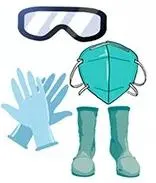
② Operators at decentralized food waste treatment stations (sites), disinfection operators, and others must properly wear medical protective masks/ medical surgical masks/N95 masks, protective suits, goggles, long rubber gloves, work uniforms, rubber rain boots, hard hats, and safety shoes. Masks should be replaced and disposed of promptly.
③ At decentralized food waste treatment stations (sites), equipment, walls, floors, and the surrounding area must be sprayed with a disinfectant containing an effective chlorine concentration of 1,000–2,000 mg/L once daily—both before and after operations—at a spray rate of 200–300 mL/m².